General MIG amp ballparks for ~3 mm mild steel — and why duty cycle at that amp matters for continuous runs versus tacks. Research guidance only, not a WPS.
Affiliate disclosure: This page contains affiliate links. We may earn a commission if you buy through them. Nothing here is a paid ranking. Gear cards below are research / Untested — not personal on-site reviews. Amp and duty figures are general education, not a welding procedure specification or machine certificate.
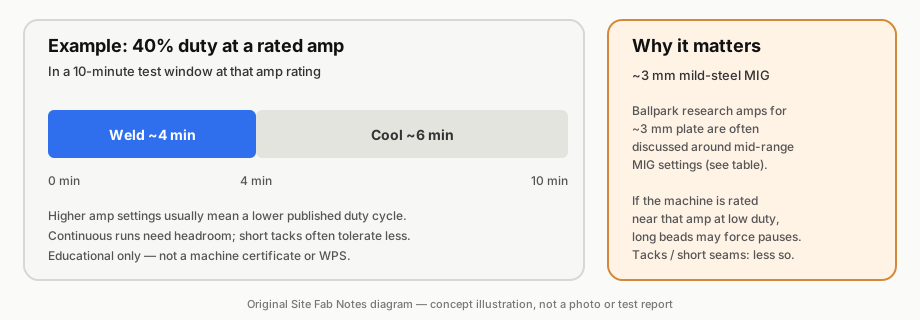
Original Site Fab Notes diagram — concept illustration, not a test report or photo of our workshop.
~3 mm ballparkResearch often cites roughly 90–140 A for mild-steel MIG
Duty at that ampContinuous beads need headroom; tacks cool naturally
Not a WPSCompare machine plates — do not treat this as procedure
Who this is for
Good fit
UK domestic / site mild-steel fab around ~3 mm plate
Comparing machine amp labels and duty ratings
Deciding if entry vs higher-amp MIG headroom matters
Not this page
Written WPS / coded procedure settings
Aluminium, stainless, or pipe specialisms
Claims we have dialled these amps on site
Amp vs thickness (research ballpark)
Research ranges only — common training-style mild-steel MIG ballparks with solid wire. Joint type, position, wire diameter, gas, and technique shift the real setting. Not a procedure.
Mild steel thickness (approx.)
MIG amp ballpark (research)
Notes
~1–1.5 mm
~40–80 A
Thin sheet; burn-through risk if hot
~2 mm
~70–110 A
Light fab / brackets
~3 mm
~90–140 A
Focus of this page — mid-range MIG talk
~4–5 mm
~120–180 A
Often wants more duty headroom
~6 mm+
~160 A+ (multi-pass common)
Machine rating and prep matter more
Duty cycle in plain terms
Continuous runs
Long beads keep the inverter near rated amp
Low duty at that amp means planned pauses
Thermal cut-out is a clue you oversized the demand
Tacks and short seams
Natural cool time between tacks
Peak amp may matter more than published duty
Still check the plate — marketing amps vary
Example used in the diagram: 40% duty at a stated amp ≈ 4 minutes weld / 6 minutes cool in a 10-minute window at that rating. Manufacturers test differently — always read the specific unit’s manual.
Gear picks Untested
Research placement only. No on-site use claims. Links go to Machine Mart via Awin.
Pick A — lighter / entry
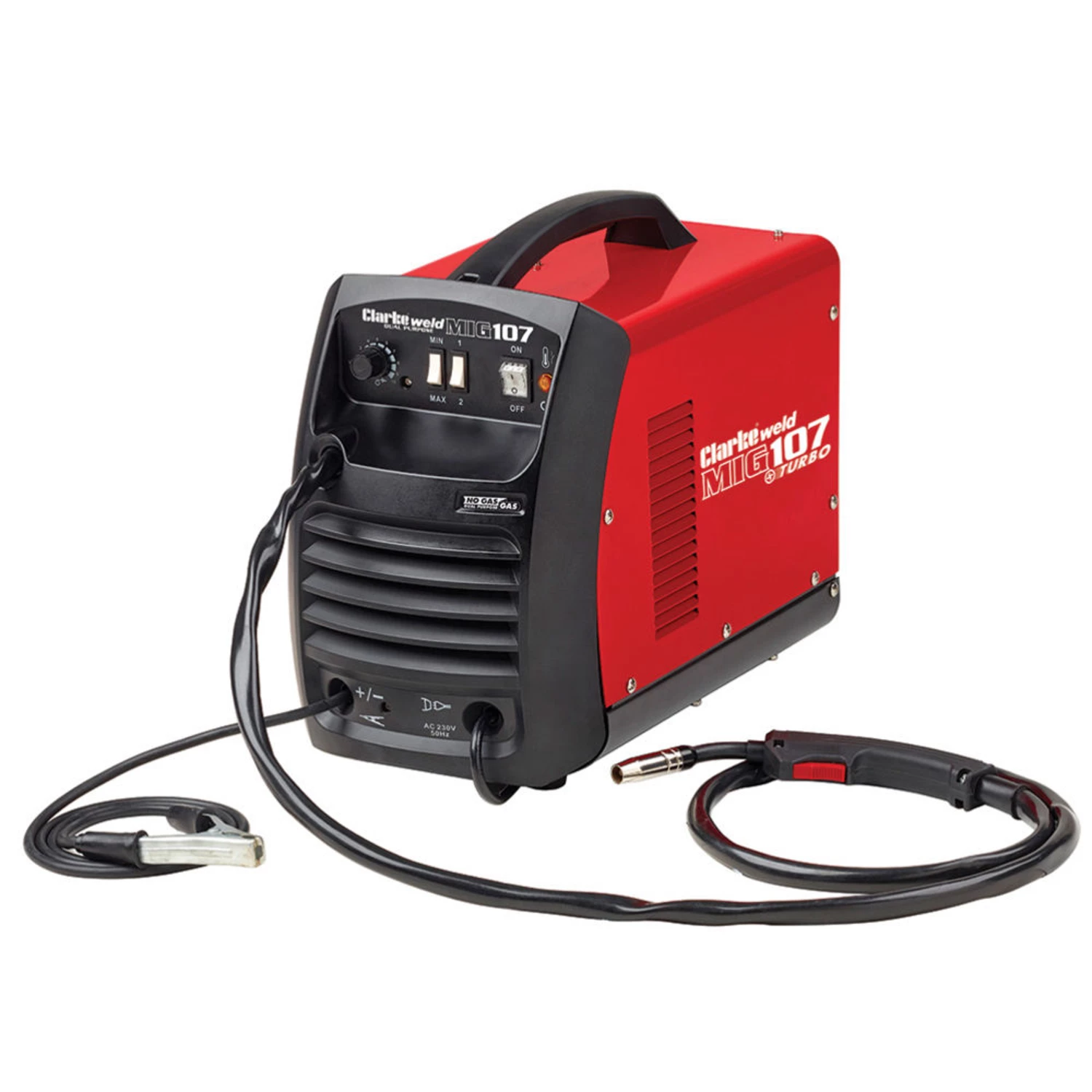
Clarke MIG107 No Gas/Gas 100Amp (230V)
Entry 100 A-class research pick for lighter domestic/site seams. Check published duty at the amps you actually need for ~3 mm — Untested.
What amp range is typically discussed for ~3 mm mild-steel MIG?
Research and training materials often discuss roughly 90–140 A as a ballpark for ~3 mm mild steel with common solid MIG wire diameters, depending on joint type, position, and wire size. Treat that as a research range to compare against machine labels — not a procedure for your job.
What does 40% duty cycle mean?
In a simplified 10-minute window at the stated amp, 40% duty means about 4 minutes of welding and 6 minutes of cooling at that rating. Manufacturers publish duty differently; always read the plate and manual for the unit you buy. This is education, not a certificate.
Why does duty cycle matter more on continuous runs than on tacks?
Short tacks leave natural cool time. Long beads or production seams keep the machine near its rated amp for longer, so a low duty rating at that amp forces pauses or thermal cut-out. Size amp headroom to how you actually weld, not only peak amps on the box.
Is a 100 A entry MIG enough for 3 mm plate?
Some light domestic and site jobs around 2–3 mm are discussed with entry 100 A-class machines, especially with short seams. Continuous heavier runs may want more amp and duty headroom. We have not tested the named products on site; compare labels and manuals yourself.
Does this page replace a welding procedure specification?
No. Amp tables here are general mild-steel MIG research ballparks for UK site fab discussion. Coded work follows your written WPS and employer procedures.
Have Site Fab Notes verified these amp figures on site?
No. Figures are framed as research ranges from common training and manufacturer-style guidance. Product cards are Untested research placements only.