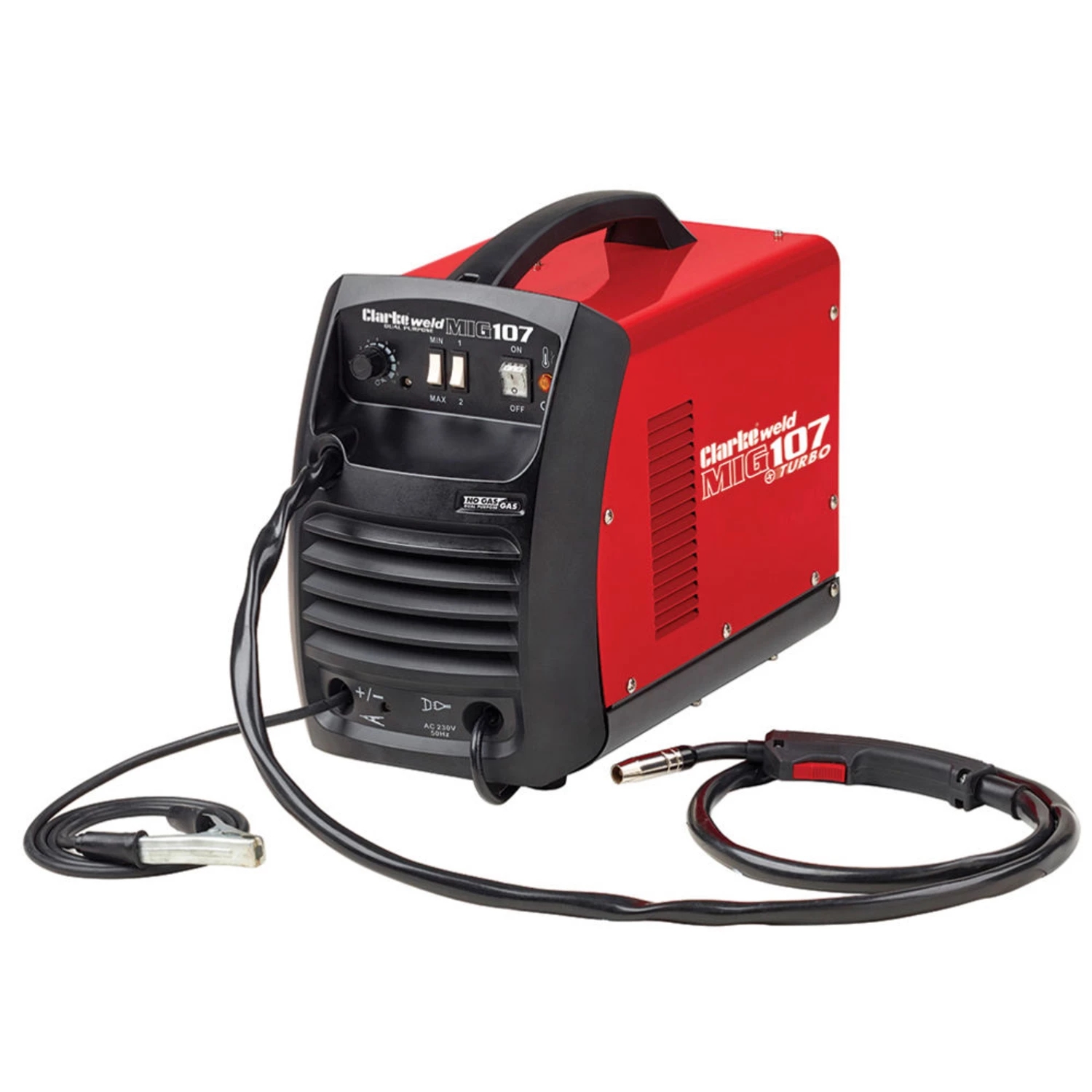
Pick A
Clarke MIG107 No Gas/Gas 100Amp (230V)
MIG starter path for light–medium mild-steel domestic/structural fab; gas/no-gas flexibility on UK 13A/230V.
Untested View on Machine MartWhen each process fits on domestic and structural mild-steel jobs — before you spend on a machine.
Affiliate disclosure: This page contains affiliate links. We may earn a commission if you buy through them. Nothing here is a paid ranking. Gear cards below are research / Untested — not personal on-site reviews. Process advice is general, not a welding procedure specification.
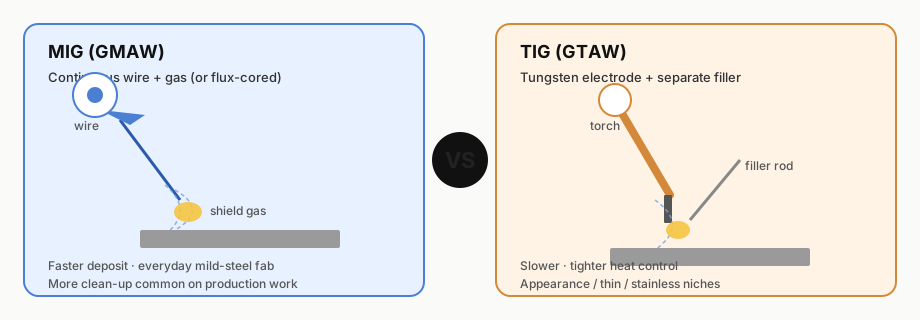
Continuous wire through a gun with shielding gas (or flux-cored). Everyday workhorse on mild steel: deposit metal, keep moving, accept more clean-up for speed.
Non-consumable tungsten plus separate filler. More deliberate heat and filler control — helps appearance and thin work; costs time.
UK supply note: Many shops run single-phase 240 V. Match machine and duty to the supply you actually have — this page does not certify any unit as “site-ready.”
| Factor | MIG | TIG |
|---|---|---|
| Speed on mild steel | Usually faster deposit | Slower; torch + filler pace |
| Learning curve | Quicker usable beads for many | Steeper heat / coordination |
| Appearance / clean-up | More spatter common | Cleaner when run well |
| Thin / stainless | Possible with care | Often preferred |
| Outdoor / wind | Gas shield sensitive | Also gas-sensitive |
| Consumables | Wire + gas (volume adds up) | Gas + filler rod |
| Typical UK use | Gates, frames, brackets, shop fab | Detail, stainless, visible joints |
One unit that claims MIG + TIG + stick can suit a small shop that needs flexibility. Expect trade-offs on duty cycle and how good each process feels versus a dedicated machine. Treat “3-in-1” marketing as a checklist, not a recommendation.
Research placement only (named for this page). No on-site use claims. Links go to Machine Mart via Awin.
MIG starter path for light–medium mild-steel domestic/structural fab; gas/no-gas flexibility on UK 13A/230V.
Untested View on Machine Mart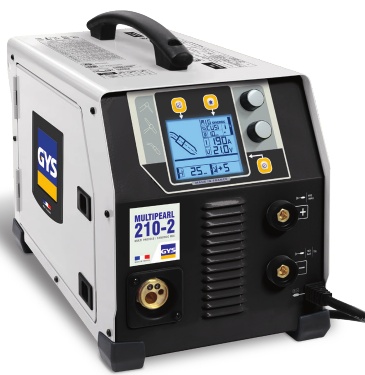
Multi-process option when MIG plus occasional TIG/MMA versatility matters in shop/maintenance work.
Untested View on Machine Mart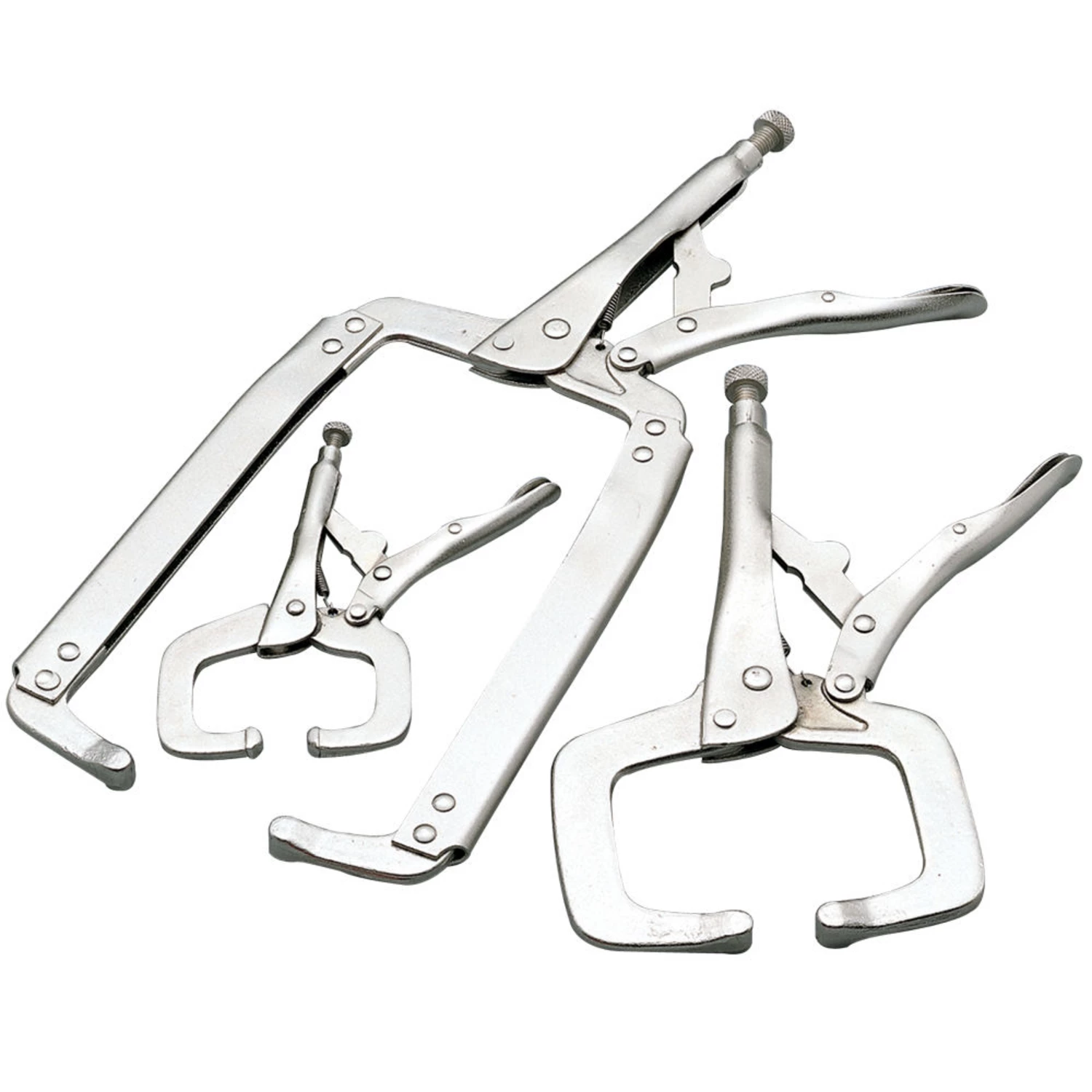
Holding steel for tacking/fit-up during fab. Complements the process page — not a welder.
Untested View on Machine MartFor most UK mild-steel gates, frames, and everyday structural fab, MIG is the usual default because of deposition speed. TIG is often preferred when appearance, thin plate, or stainless control matters more than pace. Neither is a universal rule; coded work follows your WPS.
Reach for TIG when joint appearance, thin material, or stainless heat control is the bottleneck, and you can trade time for control. Short precise joints suit TIG better than long production runs.
A multi-process box can suit a small shop that needs flexibility. Expect trade-offs on duty cycle and how good each process feels versus a dedicated machine. Treat three-in-one marketing as a checklist, not a recommendation.
No. Process advice here is general research for UK domestic and structural mild-steel jobs. Coded or contract work follows your written WPS and employer procedures.
No. Product cards are labelled Untested research placements with Machine Mart affiliate links. We do not claim on-site use of the named machines.